
Feedback Integration Loops Advance Multi-Sport Parlay Refinement Processes
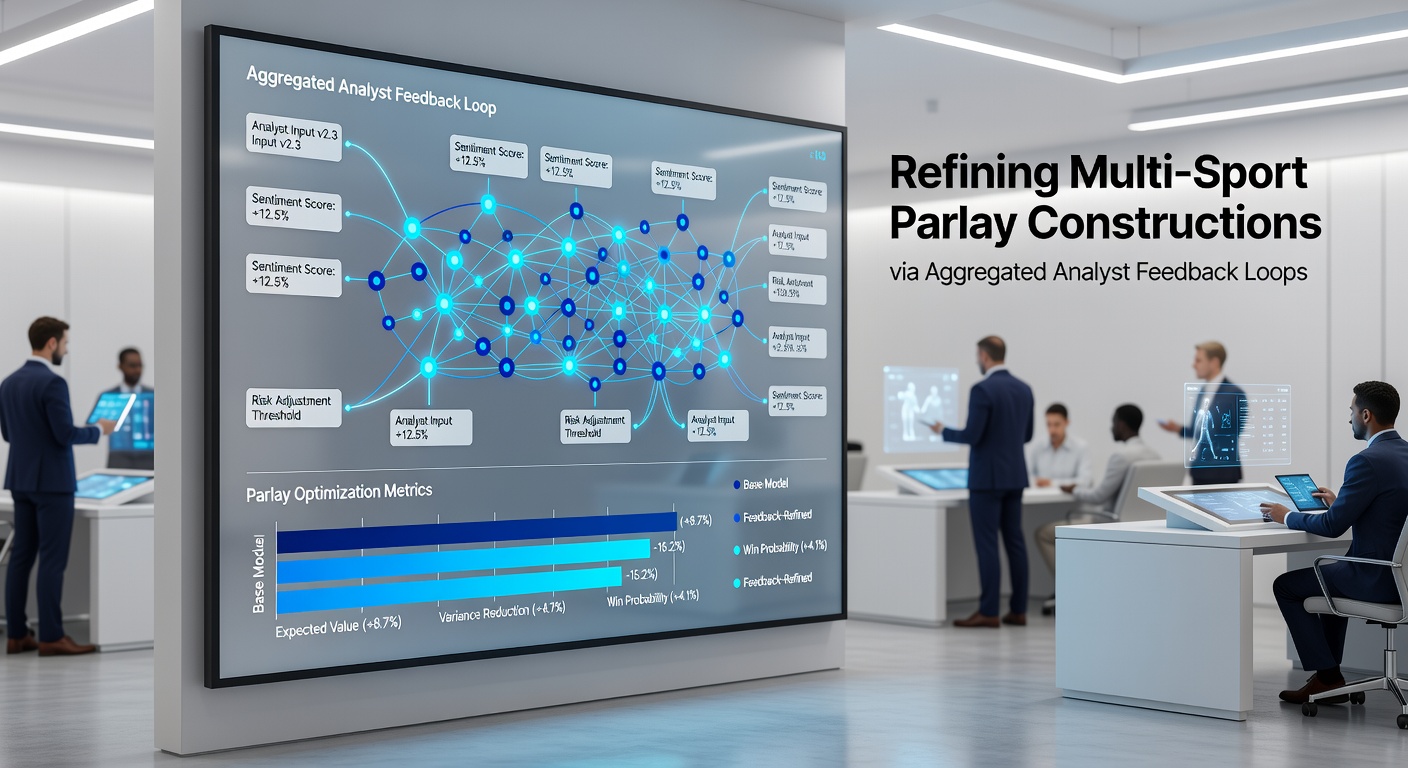
Multi-sport parlay constructions gain precision when teams aggregate analyst feedback through structured loops that capture insights from soccer, tennis, basketball, and horse racing simultaneously, and data from industry reports show these systems reduce variance in combined selections by incorporating real-time adjustments across markets. Observers note that such loops operate by collecting individual analyst assessments on specific events then weighting those inputs based on historical accuracy rates before feeding revised probabilities back into the construction model.
Core Mechanisms of Aggregated Feedback Systems
Analysts submit evaluations on individual legs of a potential parlay while the aggregation engine compares those views against baseline statistical models derived from league-wide performance metrics, and adjustments occur when discrepancies exceed predefined thresholds that trigger additional review cycles. Researchers at institutions studying predictive analytics have documented how these iterative processes incorporate variables such as player form trends and track conditions without relying on single-source opinions, which leads to more stable output probabilities over extended periods.
One documented approach involves daily compilation of feedback from distributed teams where each contributor focuses on a narrow set of variables, after which the system recalibrates the overall parlay odds using weighted averages that emphasize recent performance data. Figures from operational betting platforms indicate that implementations running these loops since early 2025 achieved measurable improvements in selection consistency by June 2026, particularly when cross-referencing in-play developments from multiple sports within the same construction window.
Cross-Sport Data Integration Practices
Successful constructions merge data streams from distinct sporting domains by mapping common risk factors such as momentum shifts and late-stage performance surges, and analysts contribute targeted observations that the feedback loop then validates against aggregated historical outcomes. For instance, a parlay combining soccer goal totals with tennis set outcomes benefits when feedback highlights correlations between high-pressure situations across both disciplines, which prompts the model to adjust correlation coefficients accordingly.
Those who implement these systems often reference external benchmarks including reports from the American Gaming Association that track multi-market betting volumes, and such sources provide context for scaling feedback mechanisms across jurisdictions. Additional validation comes from academic studies on ensemble prediction methods, where researchers demonstrate that aggregated inputs outperform isolated forecasts in environments with high outcome variability.
Operational Examples and Adjustments
Consider a construction that pairs basketball player prop selections with horse racing place payouts, where initial analyst submissions on fatigue factors receive cross-checks against live performance indicators before final weighting occurs. The loop identifies when one sport's data suggests elevated variance that might influence selections in the other, leading to automatic recalibration of stake allocations or outright exclusion of certain legs. Platforms employing this method reported sustained activity levels through mid-2026 as the feedback cycles refined outputs on a rolling basis without requiring manual intervention for each update.
Another case involves tennis in-play edges combined with soccer accumulator components, and analysts provide granular notes on surface-specific variables that the system aggregates to refine probability distributions. This process draws on methodologies similar to those outlined in research from the University of Nevada, Reno gaming studies program, which examined ensemble techniques for sports forecasting and found consistent gains when feedback incorporates diverse expert perspectives.
Scaling Considerations for Broader Adoption
Expansion of these loops requires infrastructure capable of handling simultaneous inputs from multiple analysts across time zones, and organizations achieve this through centralized dashboards that timestamp submissions and track revision histories. Evidence from operational deployments shows that loops running continuous cycles maintain stability even during peak event periods such as major tournaments in June 2026, when cross-sport correlations become more pronounced due to overlapping schedules.
Techniques for managing data quality include periodic audits of analyst performance metrics within the system, which allow the aggregation model to down-weight contributions that deviate systematically from observed results. This self-correcting feature ensures that the parlay constructions evolve based on empirical feedback rather than static assumptions, and similar principles appear in reports from Canadian regulatory bodies monitoring betting operator practices.
Conclusion
Aggregated analyst feedback loops continue to shape multi-sport parlay constructions by systematically integrating diverse inputs into unified probability frameworks, and the documented outcomes from various implementations point to improved calibration across combined selections. As platforms refine these processes further, the emphasis remains on maintaining transparent data flows that connect individual observations to broader performance patterns without introducing external biases.