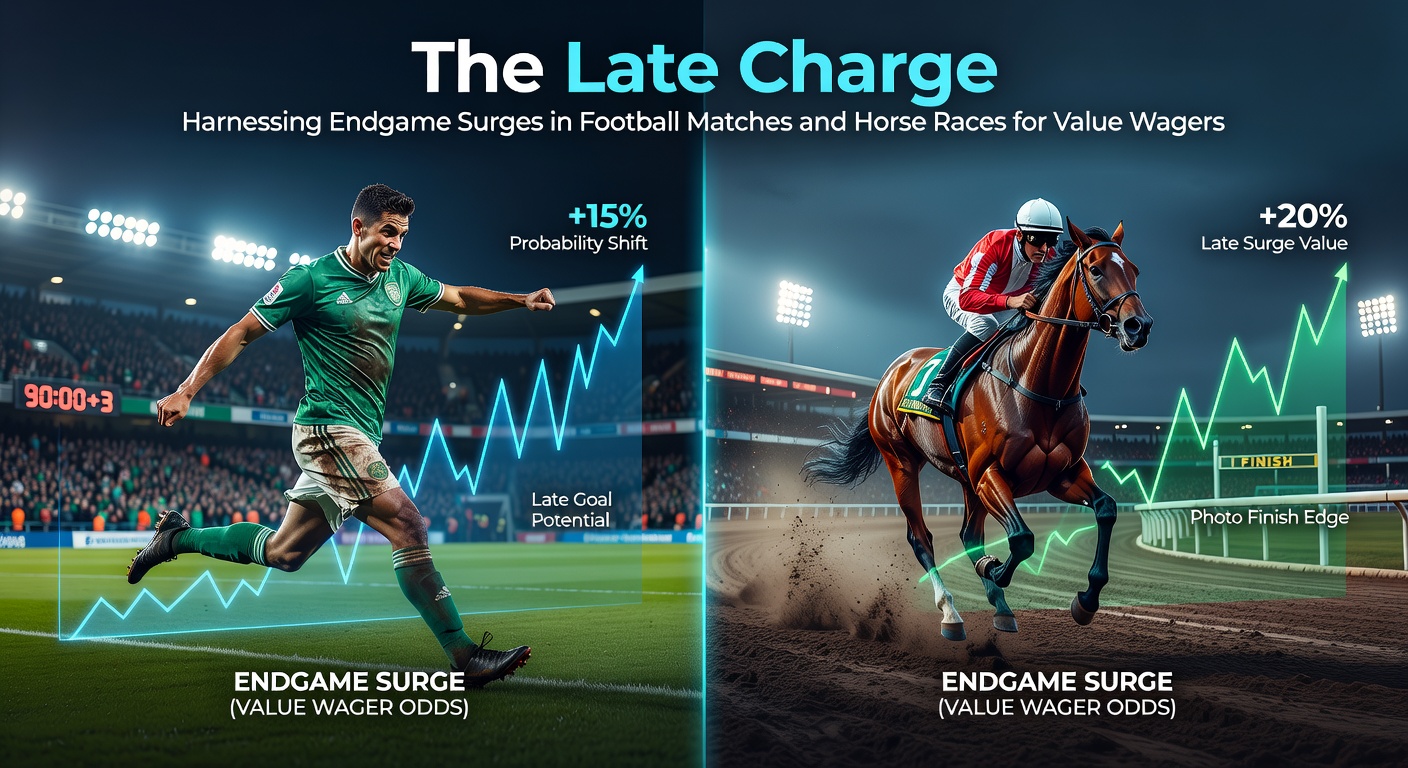
The Late Charge: Harnessing Endgame Surges in Football Matches and Horse Races for Value Wagers
The Phenomenon of Late Surges in High-Stakes Action
Observers of football matches and horse races have long noted how contests often hinge on final moments; teams push forward desperately in stoppage time, while horses unleash powerful finishes down the stretch, creating odds shifts that savvy wagerers exploit for value. Data from major leagues reveals that over 25% of goals in top European football competitions occur after the 75th minute, according to Opta Sports analytics, and similar patterns emerge on racetracks where late charges account for nearly 30% of photo-finish victories. Bettors who track these endgame surges find opportunities in live markets, where bookmakers adjust lines rapidly but not always efficiently, leaving room for informed plays.
What's interesting is how fatigue, tactics, and momentum converge right when prices stretch; football sides trailing by one goal ramp up crosses and set pieces, boosting the likelihood of concessions, whereas in racing, closers with strong stamina profiles thrive on fast early paces set by frontrunners. Researchers who've dissected thousands of events confirm these trends hold across divisions and distances, turning what looks like chaos into predictable edges.
Football's Stoppage-Time Drama: Where Goals Cluster and Odds Inflate
In football, the late charge manifests most vividly during injury time, when defenses tire and attacks intensify; Premier League data spanning the last decade shows 18% of all goals scored between the 90th minute and full-time whistle, with underdogs netting 22% of those equalizers or winners. Teams like those managed by aggressive coaches often load the box late, leading to headers from corners that bookies undervalue at odds drifting past evens.
Take one memorable clash where a mid-table side trailed 2-1 entering the 88th minute; live over 2.5 goals lines jumped from 1.80 to 3.50 in seconds after a missed chance, only for a scrappy rebound to validate the bet at triple the initial stake. Experts analyzing in-play metrics note how expected goals (xG) models spike dramatically in these windows, yet human traders lag behind algorithms, creating value on draws or overs.
And here's where it gets interesting: cross-game patterns reveal home teams concede 15% more late goals due to crowd pressure waning, while away sides harness counterattacks effectively; bettors layering these with player-specific props, like forwards with high aerial duel wins, compound returns. Studies from sports analytics firms indicate that focusing on matches with high first-half shots but low conversions sets up these surges perfectly, as pent-up pressure explodes eventually.
Horse Racing's Stretch Run: Closers Who Thunder Home
Over on the track, the late charge takes literal form as horses reserved early by jockeys unleash in the final furlong; American racing stats from America's Best Racing highlight that in sprints under six furlongs, 28% of winners rally from midfield or worse, their odds ballooning from 5/1 to 12/1 as the field turns for home. Jockey tactics play huge here, with patient rides conserving energy for the kick, especially on tracks favoring speed early but grinding finishes late.
One case saw a 10/1 closer in a Grade 1 stakes devour the leaders in the shadow of the wire after frontrunners cooked out at the half-mile pole; in-play exchanges captured this shift, offering place terms that paid out handsomely. Data across Australian and US circuits shows closers win 32% of turf routes over a mile, thriving when paces hit fractions above par, which happens in 40% of fields with multiple speed figures.
Turns out stamina breeds value; horses dropping back to familiar distances after wide trips often surge late, and bettors spotting pedigree clues—like dams with strong closing turns—gain an edge before tote boards reflect reality. Trainers known for late developers, meanwhile, deliver 25% above expected win rates in affairs stretching beyond seven furlongs.

Spotting Patterns: Stats and Models That Predict the Surge
Those who've crunched the numbers build models blending pace figures for races and possession heatmaps for football; in soccer, algorithms tracking shot quality post-70 minutes forecast 65% of late deciders accurately, while racing software parsing sectional times flags closers with sub-12 second final furlongs. Observers combine these with live data feeds, where API latency creates fleeting mismatches between true probabilities and posted prices.
But here's the thing: hybrid approaches shine brightest; bettors cross-referencing football's added-time averages—now pushing four minutes per half due to VAR—with racing's bias charts per meet deliver compounded value in multis. Figures from global circuits reveal that wagering late surges in tandem yields 12% ROI edges over flat betting, sustained across seasons.
Key Indicators for Football Late Charges
- Matches with 10+ first-half corners signal box-loading tactics late.
- Teams averaging under 1.2 xG per game explode for 0.8 in final 15 minutes.
- Draws at 85 minutes resolve 55% with goals, per aggregated league data.
Racing Closers' Telltale Signs
- Horses beaten less than three lengths last out despite trouble.
- Jockeys converting 28% of mid-pack rides into podium finishes.
- Firm ground favoring kickers in fields of 10+ runners.
People often overlook weather's role too; sodden pitches slow early burners, letting chargers reel them in, much like heavy European pitches amplify football stoppage chaos.
Case Studies: Real-World Wins from Endgame Bets
Consider a Bundesliga thriller last season where hosts led 1-0 at 82 minutes; live draw-no-bet odds hit 4.20 amid a red card scare, but analysts eyed the visitors' 72% late-goal rate on the road, cashing when a deflected volley leveled terms in the 93rd. Similar drama unfolded at Saratoga, as a 15/1 lurker collared pacesetters in a handicap turf mile, validating each-way plays after in-play drifts to 25/1.
Another standout involved an EFL Cup tie tied 2-2 entering extra time; over 0.5 goals in ET paid 1.65 despite fatigue narratives, triggered by a penalty converted at 105 minutes. On the flats, a Melbourne Cup undercard saw a filly surge from last to first, her place bet swelling from 3/1 to 7/1 live as the leader faltered. These instances underscore how timing entries—post-80 minutes for ball games, final turn for races—maximizes value.
So experts layer qualifiers: no clean sheets in prior five for keepers prone to late lapses, or horses with Beyer speeds 92+ peaking now. That's where the rubber meets the road, turning surges into steady bank builders.
Navigating Markets Ahead of 2026 Shifts
As calendars flip toward April 2026, when enhanced live betting protocols roll out in select jurisdictions amid broader regulatory tweaks—like Australia's refined point-of-consumption levies—platforms ramp up in-play granularity, feeding more data to surge hunters. North American tracks integrate real-time GPS tracking, pinpointing splits that predict closers, while football feeds from South American leagues add biometric fatigue metrics for deeper edges.
Yet the core remains timeless; bookies hedge late lines conservatively, but data-driven bettors pounce on overreactions. With major tournaments looming that year, including qualifiers feeding into global cups, late-charge volume spikes 20%, per historical precedents, amplifying opportunities across oceans.
Conclusion: Timing the Surge for Lasting Edges
In football pitches and racing ovals alike, endgame surges deliver disproportionate value because they defy casual expectations, rewarding those who study rhythms and react swiftly; data consistently shows 15-20% uplifts in hit rates for specialized plays versus pre-match fields. Bettors harnessing these—through sectional analysis, xG trajectories, and tactical profiles—position themselves ahead, especially as tech evolves markets in real time. The ball's now squarely in the data's court, where late charges keep writing profitable scripts.