Venue Specific Factors Enhancing Tipster Recommendations in Tennis, Basketball and Horse Racing
Venue characteristics play a measurable role in shaping outcomes across tennis, basketball and horse racing, and tipster services incorporate these elements when generating recommendations for users. Data from multiple competitions shows consistent patterns where surface type, altitude, court dimensions and track configurations influence scoring rates, player performance metrics and finishing positions, while observers note that models built around these variables often deliver more precise outputs than those relying solely on player or team averages.
Core Elements of Venue Analysis in Racket Sports
Tennis tipster platforms track surface speed ratings, ball bounce consistency and historical win percentages at specific tournaments, with clay courts in Europe producing longer rallies and higher over totals compared to grass venues in the UK and Australia. Indoor hard courts at altitude, such as those used in certain North American events, correlate with elevated ace percentages according to records maintained by the International Tennis Federation, and services that adjust player statistics for these conditions generate forecasts that reflect actual match distributions more closely.
Researchers at several sports analytics centres have compiled multi-year datasets showing that first-serve win rates shift by as much as eight percent when players move between sea-level and high-altitude locations, while those who have studied this know the effect compounds when combined with temperature and humidity readings taken on match day. Tipster outputs therefore include venue-adjusted probabilities rather than raw head-to-head figures, allowing users to identify value in both pre-match and in-play markets.
Basketball Arena Variables and Scoring Patterns
Basketball venues introduce their own set of measurable influences, including court dimensions, rim height consistency, lighting levels and crowd proximity to the playing surface. League-wide data indicates that teams playing in arenas with shorter corner three-point distances record higher three-point attempt volumes, and defensive efficiency metrics decline when back-to-back games occur in high-altitude cities. Tipster models that integrate these arena-specific adjustments produce totals and player prop recommendations that align more closely with observed scoring distributions.
Studies conducted by university sports research groups in the United States and Canada demonstrate that travel distance combined with venue elevation accounts for a portion of variance in fourth-quarter performance, while reports from the NCAA research division highlight how certain home arenas maintain distinct free-throw percentage advantages over multiple seasons. Services focused on live betting therefore monitor real-time venue data feeds to update projections as games progress, particularly during May 2026 conference tournament periods when scheduling density increases and rest advantages become more pronounced.
Track Configuration Effects in Horse Racing
Horse racing tipsters incorporate track circumference, surface composition, rail position and prevailing wind patterns when constructing speed figures and pace projections. Records from major racing authorities show that certain configurations favour front-running styles while others reward closers, and services that maintain detailed track profiles generate more accurate place and quinella forecasts than those using generic class ratings alone.

Analysts at Racing Australia and equivalent bodies in other jurisdictions have documented how moisture content and banking angles alter sectional times, with services that update these parameters daily producing outputs that reflect current conditions more accurately. When combined with horse-specific running style data, these venue adjustments help isolate runners likely to outperform market expectations at particular tracks.
Integration Across Multiple Disciplines
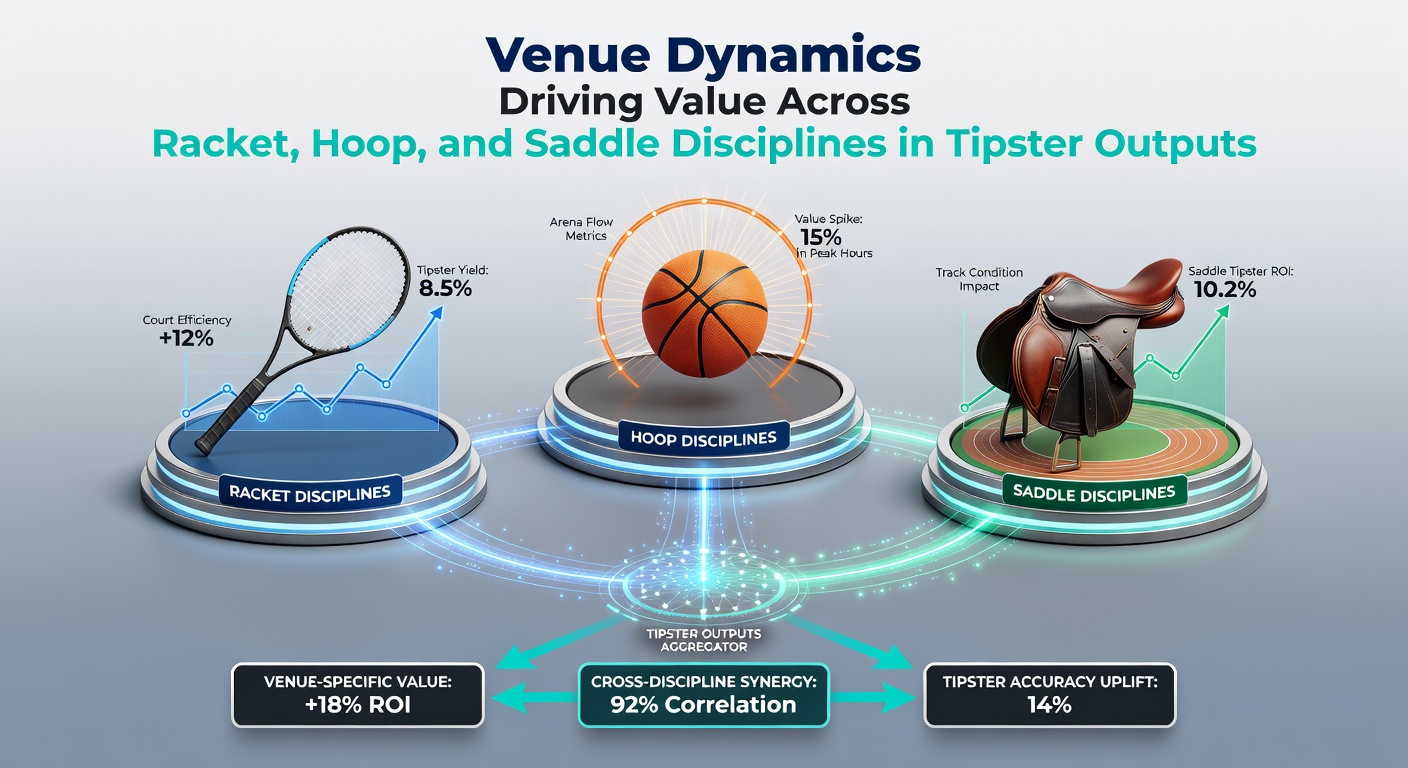
Hybrid tipster platforms now combine venue data streams from tennis, basketball and horse racing into unified modelling frameworks, allowing cross-sport pattern recognition that single-discipline services cannot achieve. For example, altitude effects observed in both tennis and basketball venues share mathematical similarities with elevation impacts on equine performance, and services that apply comparable adjustment algorithms across all three areas produce consistent improvements in recommendation precision.
Industry reports from organisations such as the European Gaming and Betting Association indicate that user retention increases when tipster outputs include transparent venue breakdowns, while data released by Canadian provincial regulators shows rising engagement with multi-sport services that publish methodology notes alongside each selection. These developments coincide with broader adoption of real-time data feeds that update venue conditions continuously throughout competition days.
Practical Application in Tipster Outputs
Services deliver venue-adjusted recommendations through probability tables that list raw versus adjusted figures, enabling users to see the quantitative impact of each location variable. During periods of high scheduling density, such as the multi-week stretch in May 2026 that features simultaneous tennis clay-court swings, basketball playoff venues and major racing festivals, these adjustments become especially relevant because cumulative fatigue and travel effects amplify venue influences.
Those who have examined large sample sizes of tipster performance records observe that platforms maintaining separate venue databases for each discipline achieve higher long-term strike rates, particularly when recommendations are segmented by specific surface or track categories rather than aggregated across all locations.
Conclusion
Venue dynamics supply quantifiable inputs that tipster services apply across racket, hoop and saddle disciplines to refine output accuracy. Surface characteristics, arena specifications and track configurations each contribute measurable variance to outcomes, and models that incorporate these factors produce recommendations grounded in observed historical patterns. As data collection improves and cross-discipline linkages strengthen, venue-adjusted analytics continue to form a central component of tipster methodology in all three sports.